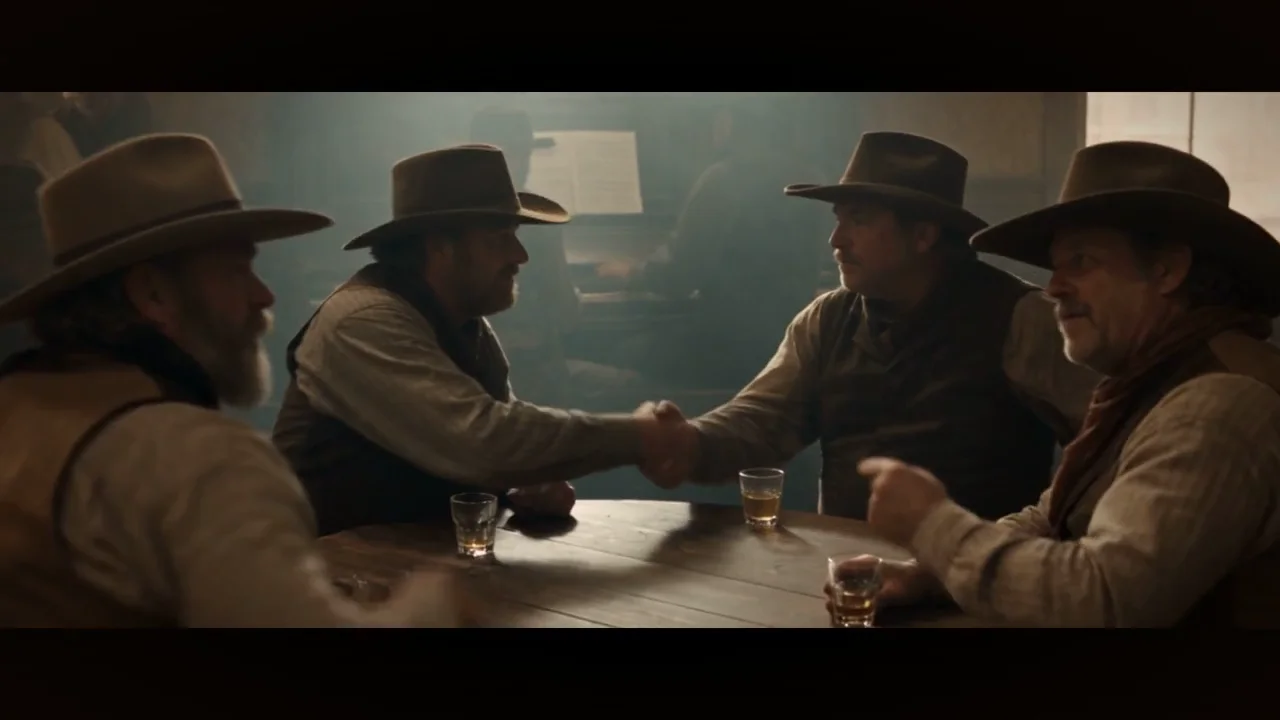
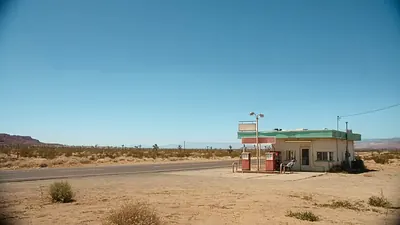
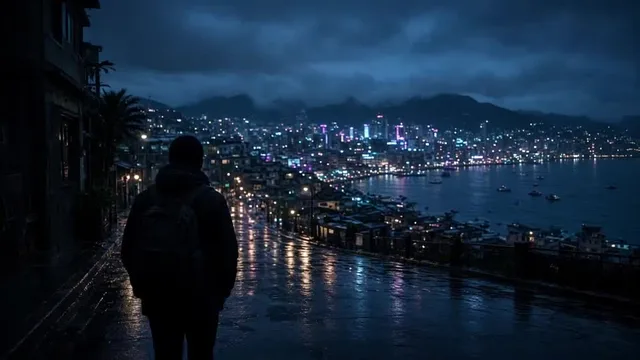
Generate 3–30 second 720p or 1080p videos with Kuaishou's October 2026 Kling 4.0 model on EaseGen—combining native stereo audio, First/Last Frame locking, and up to 18 image, video, and voice references in one pass.
What Makes Kling 4.0 Built for 30-Second Directed Video
Released by Kuaishou on October 15, 2026, Kling 4.0 replaces short 5–15 second single-beat generations with continuous 3–30 second scenes, two-channel native stereo audio, and structured 8,000-character time-coded prompts.
On EaseGen, Kling 4.0 runs in two distinct workflows under Image to Video alongside Text to Video: attach a First Frame and optional Last Frame to bridge exact start and end compositions, or combine up to 10 reference images, 5 reference videos, and 3 reference voice clips tagged with @Image 1, @Video 1, and @Audio 1.
All outputs on EaseGen currently render in 720p or 1080p SDR MP4 with native audio included in the standard rate: 86 credits per second at 720p (258 credits minimum for 3s) and 128 credits per second at 1080p (384 credits for 3s), dropping to 51 credits/s (720p) and 77 credits/s (1080p) per billed second when reference videos are attached.
3–30s Single-Pass Continuity
Hold camera trajectories, character identity, and multi-beat blocking across up to 30 seconds in one generation without manual stitching.
10 Images, 5 Videos, 3 Voices
Direct complex cast and prop continuity in Reference mode by naming uploaded assets directly inside prompts up to 8,000 characters.
Predictable Stereo Audio & Keyframes
Lock opening and closing visuals via First/Last Frame mode and generate synchronized ambient foley and dialogue without audio add-on fees.
Independent Kling 4.0 Tests & Benchmarks
Independent side-by-side creator tests with direct verdicts up front—comparing Kling 4.0 against Seedance 2.5, Wan 3.0, and Kling 3.0 on realism, motion, character consistency, and cost.
We Tested Kling 4.0 Against Seedance 2.5, and It's Not Close
YouTubeCurious RefugeKling 4.0 vs Seedance 2.5
Verdict: Seedance 2.5 won decisively on cinematic realism and physics across 6 tests (action, combat, drone orbit, taxi dialogue, hiking, anime). Kling 4.0 cost roughly one-third as much (~$8.40 vs ~$24 for 30s 1080p) and tracked the NY taxi prompt and anime style reference closely, but looked stiffer in live-action combat.
Verdict: In an 8-model plain-English 30s dialogue shootout, JSFILMZ ranked Seedance 2.5 1st, Wan 3.0 2nd (more natural facial skin texture), and Kling 4.0 a close 3rd—calling Kling 4.0 solid for its price point while noting slightly more artificial facial texture on simple text prompts.
Kling 4.0 vs Kling 3.0: Is the Upgrade Actually Worth It?
YouTubeAiRaceKling 4.0 vs Kling 3.0
Verdict: Kling 4.0 beat Kling 3.0 in head-to-head recurring-character consistency and motion smoothness tests—preserving finer facial detail and delivering more controlled movement across multi-scene character shots (OpenArt-sponsored Kling 4.0 vs 3.0 review).
Seedance 2.5 (or Kling 4.0 with First/Last Frame anchors)
Why It Works Best
Same-prompt tests show Seedance 2.5 produces looser, more organic cloth and petal motion on bare prompts, while Kling 4.0 shines when guided with frames and lens detail.
Unlike Kling 4.0 Flash (capped at 20s / 720p with no end keyframe), EaseGen runs full Kling 4.0 with a built-in End Frame slot—no 3s connector hacks needed.
Credit & Workflow Impact
Standard rate; output aspect ratio locks to first frame
Scenario / Goal
Clean multi-shot workspace without cluttered layout
Recommended Setup on EaseGen
EaseGen Kling 4.0 Workspace (Left controls + Top History)
Why It Works Best
Avoids official-web UI regressions where prompts cover videos or newest takes sink to the bottom: EaseGen keeps inputs docked left and newest outputs at the top.
Credit & Workflow Impact
One-click prompt reuse & direct reference re-uploads
Scenario / Goal
Refusal blocks, 4K delivery, or high-volume drafts
Recommended Setup on EaseGen
Switch in-place to Wan 3.0 (34 cr/s 1080p) or Kling 3.0 (4K)
Why It Works Best
When cross-asset safety filters falsely trigger or you need true 4K / lowest budget runs, switch models inside the same workspace without re-uploading from scratch.
Credit & Workflow Impact
Wan 3.0 1080p 5s = 170 cr; Kling 3.0 from 42 cr (with 4K)
Scenario / Goal
Recommended Setup on EaseGen
Why It Works Best
Credit & Workflow Impact
Strict camera arcs & timed action beats
Kling 4.0 (Text to Video or @Image / @Video Refs)
Acts like a literal camera operator—accurately following orbit arcs, profile close-ups, and 5–8s action beats where broader text models drift.
Seedance 2.5 (or Kling 4.0 with First/Last Frame anchors)
Same-prompt tests show Seedance 2.5 produces looser, more organic cloth and petal motion on bare prompts, while Kling 4.0 shines when guided with frames and lens detail.
Unlike Kling 4.0 Flash (capped at 20s / 720p with no end keyframe), EaseGen runs full Kling 4.0 with a built-in End Frame slot—no 3s connector hacks needed.
Standard rate; output aspect ratio locks to first frame
Clean multi-shot workspace without cluttered layout
EaseGen Kling 4.0 Workspace (Left controls + Top History)
Avoids official-web UI regressions where prompts cover videos or newest takes sink to the bottom: EaseGen keeps inputs docked left and newest outputs at the top.
One-click prompt reuse & direct reference re-uploads
Refusal blocks, 4K delivery, or high-volume drafts
Switch in-place to Wan 3.0 (34 cr/s 1080p) or Kling 3.0 (4K)
When cross-asset safety filters falsely trigger or you need true 4K / lowest budget runs, switch models inside the same workspace without re-uploading from scratch.
Wan 3.0 1080p 5s = 170 cr; Kling 3.0 from 42 cr (with 4K)
Kling 4.0 Video Examples & Prompts
Watch real Kling 4.0 clips alongside the exact timestamps, keyframes, and @reference prompts behind each shot—copy any prompt or load it directly into the generator.
Manhattan Continuous Street Escape One-Take (20s Published Cut)
FORMAT: 16:9 cinematic street escape. ONE continuous side-tracking shot, NO CUTS. Camera moves left parallel to a busy Manhattan street, following one young woman.
SETTING: NYC street with outdoor cafes, yellow taxis, parked cars, scaffolding, newspaper stands, storefront reflections, subway steam, and dense crowds. Foreground objects repeatedly obscure the camera. Cool, desaturated film look, shallow depth of field, fine grain.
CHARACTER: One frightened young woman carrying a large, heavy travel bag. She runs desperately, gasping and sweating. The bag swings with delayed inertia, strikes her leg, and disrupts her balance. Realistic footfalls and physical weight. No pursuers.
0–5s: CALM OPENING. Camera slowly tracks left past outdoor cafe tables, wicker chairs, and pedestrians. Someone lifts a coffee cup. Traffic ambience. The woman suddenly appears blurred at the far right, running fast.
5–12s: CHASE. Camera accelerates left to catch her, briefly hunting focus. She sprints past cafe seating and steaming subway grates, breathing heavily, jaw clenched. She looks back twice in fear. Her heavy bag swings and repeatedly hits her leg. Pedestrians and street objects whip across the foreground.
12–15s: LOST. A yellow taxi or pedestrians completely block the view for 0.5–1s. When clear, she is gone from the center. Camera slows and searches left, briefly defocusing past lampposts, parked cars, and storefronts. Still one continuous shot.
15–21s: REACQUIRE. Camera finds her farther ahead, still running left. Accelerates to catch up and refocuses on her. She is exhausted, breathing harder, taking shorter strides. She switches the heavy bag between hands, struggling with its weight.
21–30s: DISAPPEAR. Camera tracks her full-body profile past scaffolding and green netting. Poles sweep across the lens; her reflection appears in shop windows. She pushes into a dense crowd, repeatedly hidden by pedestrians. Camera slows and falls behind. Her back and bag briefly remain visible before vanishing into the crowd. End on moving pedestrians.
CAMERA: Natural handheld shoulder-rig tracking, subtle bobbing, lateral sway, acceleration and deceleration. Realistic manual focus shifts and brief defocus. No mechanical camera motion.
AUDIO: SFX only. Traffic, horns, voices, footsteps, steam, rapid breathing, and heavy bag impacts. Taxi whoosh masks sound during occlusion. Breathing fades when lost, grows louder when found, then disappears beneath crowd noise.
NEGATIVE: No cuts, transitions, slow motion, music, dialogue, subtitles, watermarks, pursuers, sliding feet, weightless bag, clipping bodies, duplicated people, or sudden scene changes.
Continuous lateral tracking shot along a busy Manhattan street as a panicked young woman carrying a heavy travel bag sprints past sidewalk cafes, yellow taxis, and scaffolding before vanishing into a dense pedestrian crowd.
20s continuous street escape cut (keyframe-to-video)
6-Cut Blacksmith Greatsword Forging (First / Last Frame)
ONE BLACKSMITH ONLY. 15-second photorealistic workshop film, six shots with hard cuts at 3, 5, 8, 10, 11 seconds. No transitions or morphing. Subtle handheld sway.
REFERENCES: @Image1 is the exact opening frame: five iron blocks on a table, matching layout and lighting. @Image2 is the exact final frame: a greatsword with fuller, curved guard, spiral grip and faceted pommel, diagonally positioned with hilt upper-left and tip lower-right. Match both images precisely.
CONTINUITY: The same blacksmith in every shot: soot-gray sleeves, brown leather gloves, dark strap on right cuff. Only hands and forearms visible. Camera stays on viewer-facing side. Reference framing at both ends; close-ups between.
0–3s, PICKUP: Begin exactly on @Image1, five blocks, no hands. Both gloved hands enter from left, firmly grip opposite ends of the largest central block, brace and lift it slowly. Expose the tabletop beneath. Carry it off left. Four blocks remain.
3–5s, HEATING: Hard cut to glowing orange billet in coal forge. Blacksmith draws it toward the opening with long tongs. Heat shimmer.
5–8s, FORGING: Hard cut to elongated orange-hot blade blank on anvil, tang left, tip right. Left hand holds tongs; right hand delivers exactly three heavy hammer blows. Scale scatters; hands recoil.
8–10s, GRINDING: Hard cut to cooled blade with fuller already formed. One controlled pass against abrasive wheel; localized sparks and polished bevel.
10–11s, ASSEMBLY: Hard cut to nearly finished sword, guard and spiral grip fitted. One final tightening turn of faceted pommel.
11–15s, PLACEMENT: Hard cut to original table, now completely EMPTY. Show empty surface for 0.4s. Blacksmith enters from left holding completed rigid sword with both hands, one on grip, one under blade. Lower it carefully onto table, hilt upper-left, tip lower-right. Metal clinks; supporting hand slides free. Both hands withdraw. Hold exact @Image2 framing and sword position until end.
PHYSICS: Continuous contact in pickup and placement; weight, gravity and contact shadows. Large shape changes occur only between cuts. No duplicate limbs, floating metal or intersecting objects.
LOOK: Daylight on table, orange forge glow for heating; worn workshop, muted browns, charcoal metal, natural motion blur, restrained film grain.
SOUND: Workshop air, furnace crackle, leather creaks, metal scrape, three synchronized hammer hits, grinding, pommel twist, final heavy sword-to-table clink. SFX only; no dialogue, music, text or subtitles.
Six hard cuts at 3, 5, 8, 10, and 11 seconds bridging five iron blocks on the opening frame (`@Image1`) to the completed diagonal greatsword resting on the same empty workshop table on the closing frame (`@Image2`).
15s, 16:9 handcrafted clay stop-motion, 12fps stepped motion. Follow @Image1 storyboard shot order, composition, camera paths and emotions. @Image2 defines BISCUIT's exact appearance. Render finished animation, NOT storyboard art. ONE continuous shot, NO CUTS.
BISCUIT: Small plump brown clay terrier, messy fur, one floppy ear, one upright ear, big black nose, wide eyes, short tail. White spacesuit with orange cuffs, open-front glass helmet, antenna backpack, oversized moon boots. Carries a fork larger than himself. Maintain identical design throughout.
C2: Friendly bus-sized clay cheese mouse.
WORLD: Yellow cheese moon full of holes and tunnels, crooked rocket, black felt sky, foil stars, clay Earth. Warm miniature lighting, shallow depth of field, visible fingerprints and handmade clay textures. Cheese wobbles like jelly.
CAMERA: One continuous moving camera. Start low, bob beside jumps, dive into tunnel, tilt upward, follow escape, then rise to extreme long shot. No cuts.
0–2s P01: Biscuit exits rocket, touches cheese with paw, sniffs eagerly. Eyes widen. Fork over shoulder, Earth visible. CURIOSITY.
2–4.5s P02: Slow low-gravity jumps, ears bouncing. Camera bobs alongside. Fork stabs cheese wedge; entire moon jiggles. Huge hole opens beneath him. SURPRISE.
4.5–7s P03: Camera dives into hole with Biscuit. He tumbles through cheese tunnel, holding fork. Passes giant mouse chewing wall; mouse squeals in surprise.
7–9.5s P04: Camera tilts upward from tunnel bottom. Mouse chases Biscuit upward. He panics, bouncing between walls, curly cheese ribbons trailing from fork. PEAK CHASE.
9.5–12s P05: Both burst from hole. Biscuit flies upward in slow low-gravity arc, mouse emerging behind. Upside down, he scoops cheese with fork and takes a huge bite. ECSTATIC BLISS.
12–15s P06: Camera rises and pulls back. Biscuit and mouse sit together at hole's edge, sharing cheese. Rocket behind, Earth rising, foil stars above. Biscuit fogs helmet with happy breath, tail wagging. Hold final wide shot. CONTENTMENT.
AUDIO: No music until 12s. Clay squeaks, springy boings, jelly rumble, rubber pop, falling whoosh, mouse chewing and squeal, paw scratches, cheese bite, tail thumps. Cheerful tuba and ukulele begin at 12s.
RULES: Consistent characters, suit, fork and environment. Handmade stop-motion only. No cuts, duplicates, clipping, sketch textures, storyboard grids, text, labels or watermarks.
Follows Biscuit, a spacesuit-wearing clay terrier carrying an oversized fork, and a bus-sized cheese mouse across a miniature moon in one unbroken 12fps stop-motion take pairing storyboard (`@Image1`) and character design (`@Image2`) references.
15s 12fps clay stop-motion (@Image 1 + @Image 2)
17th-Century Night March Into Oil Painting Finale (Last Frame)
FORMAT: 15s cinematic historical film, ONE continuous shot, no cuts. Use @Image1 as the EXACT final-frame reference for Rembrandt's The Night Watch: all existing characters, costumes, weapons, positions, lighting, colors and full composition. No extra characters. Start entirely photorealistic; oil-paint texture appears ONLY near the end. Nobody emerges from a painting.
SETTING: 17th-century militia assembling beneath a dark city archway on stone pavement. Deep Rembrandt chiaroscuro, warm side sunlight, suspended dust, dark surroundings; no moonlight. Realistic skin, fabric, metal, shadows and depth of field.
CAMERA: Begin low among marching boots, move through the group, then smoothly pull back and rise slightly to reveal the full composition. One spatially continuous handheld tracking movement, subtle natural sway, no abrupt angle changes.
0–3s — MARCH: Close view of boots striking stone, drumsticks beating, red sleeve passing lens. Tilt up along a musket beneath a flag. Natural walking speed, realistic weight and inertia. Completely live-action, no brushstrokes.
3–8s — CROWD: Track toward the black-clad captain with red sash. He turns, checks his men and extends a commanding hand. The pale-gold lieutenant advances beside him. Guards raise pikes and adjust formation; a blonde girl briefly looks back. Natural restrained acting, realistic materials.
8–12s — TABLEAU: Pull back and rise as everyone moves into their exact @Image1 positions. Reveal captain's hand, lieutenant, red-clad guard, girl, weapons and right-side drummer. The entire composition becomes visible, still photorealistic. Drums abruptly stop; everyone freezes for 0.5s.
12–15s — PAINTING: Continue the same slow pullback. Only now, photorealistic details gradually turn into rich oil paint, spreading from frame edges toward center. Preserve every figure, pose, proportion, light and color. End on the complete, motionless @Image1 painting, centered and uncropped at its original aspect ratio against dark surroundings.
AUDIO: Boots on stone, fabric rustle, metallic clinks and live drums. Low strings and rising orchestral score build toward the tableau. Drums stop at the freeze, leaving brief musical resonance. No dialogue.
RULES: Exactly one historical scene and one unbroken take. Maintain character and costume continuity, physical contact, realistic weapon movement and stable architecture. No early painting effect, extra people, character duplication, morphing anatomy, scene changes, cuts, flashes, page turns, cropped artwork, text or watermarks.
Starts completely photorealistic inside a 17th-century militia march, freezes on the full tableau for 0.5 seconds at the drum cutoff, and resolves from frame edges inward into Rembrandt's The Night Watch (`@Image1`).
15s live-action march into oil painting finale (Last Frame lock)
Kling 4.0 Technical Specifications on EaseGen
Clip lengths, resolutions, reference limits, and credit rates for Kling 4.0 on EaseGen.
Specification
Kling 4.0 on EaseGen
Developer & Launch Date
Kuaishou (Kling AI) — released October 15, 2026
Generation Modes
Text to Video (default) and Image to Video (Multimodal References or First/Last Frame)
Clip Duration
3 to 30 seconds in 1-second increments (default: 5 seconds)
Output Resolution & Format
720p or 1080p SDR MP4 (4K and 10-bit HDR are not yet enabled on Kling 4.0)
Aspect Ratios
Adaptive, 16:9, 9:16, 1:1, 4:3, 3:4, 21:9 (locks to first frame when First/Last Frame is active)
Prompt Length Limit
Up to 8,000 characters supporting second-by-second timestamps and @ mentions
Multimodal Reference Caps
Up to 10 images (10 MB JPEG/PNG/WebP), 5 videos (2–30s each / 30s total, 100 MB MP4/MOV), 3 audio clips (2–30s each / 30s total, 15 MB MP3/WAV)
Standard Credit Pricing
86 credits/s at 720p (min 3s = 258 credits) • 128 credits/s at 1080p (min 3s = 384 credits)
Reference-Video Pricing
51 credits/billed s (720p) • 77 credits/billed s (1080p) across max(output × 2, output + ceil(input seconds))
Native Audio
Two-channel stereo sound included on all runs at 720p and 1080p with zero extra surcharge
Key Kling 4.0 Capabilities on EaseGen
18-Asset Multimodal Mixing
Combine up to 10 character/set images, 5 motion or style videos, and 3 voice audio clips in one Image-to-Video prompt with @Image, @Video, and @Audio tags.
Time-Coded 30s Directing
Script multi-beat narratives or single uninterrupted tracking shots up to 30 seconds inside an 8,000-character prompt window.
First/Last Frame Anchoring
Upload a start frame and an optional end frame to lock key transitions while matching the opening frame's natural aspect ratio.
Included Native Stereo Audio
Dialogue, foley, and ambient acoustic beds generate natively at both 720p and 1080p without a paid audio add-on multiplier.
How to Create Videos with Kling 4.0 on EaseGen
Step 1
1. Sign In & Choose Mode
Sign in with Google on EaseGen, verify Kling 4.0 is selected in the model picker, and pick Text to Video or Image to Video.
Step 2
2. Attach Frames or @References
In Image to Video, either toggle First/Last Frame for strict start-to-end keyframe transitions or upload up to 10 images, 5 videos (2–30s), and 3 audio files (2–30s).
Step 3
3. Write Time-Coded Prompts
Describe actions in second-by-second beats (up to 8,000 characters), click any @Image 1 / @Video 1 / @Audio 1 pill to anchor roles, and state positive acoustic cues.
Step 4
4. Pick 720p or 1080p & 3–30s
Draft quick tests at 720p (86 cr/s) before locking final 1080p (128 cr/s) renders, review the live credit estimate on the button, and click Generate Video.
Fixing Common Kling 4.0 Prompt, Realism & Audio Issues
Creator-tested fixes drawn from Reddit and X production threads to eliminate CGI-looking short prompts, 30s static talking heads, unwanted music, cuts, and false-positive blocks.
Fix "Rendered" Look & Unnatural Motion on Short Prompts
Unlike Kling 3.0, sparse one-line prompts on Kling 4.0 often look overly synthetic or CGI-rendered and warp fingers during complex spins. Specify camera lens, lighting, tactile textures, and organic motion physics.
Weak prompt
Overhead dancer spinning in orange dress, flowers flying in a full circle, drops down laughing.
Better prompt
Shot on 35mm film at f/2.8, overcast natural courtyard light. Dancer spins clockwise in lightweight linen terracotta dress with soft organic pleat folds; wind scatters irregular loose bougainvillea petals asymmetrically across rough limestone floor before she drops gracefully to sit.
Long 20–30s text prompts without explicit spoken language or time-stamped movement can collapse into stationary dialogue in an unintended language. Lock language and schedule action every 5–8 seconds, and pre-test 5s at 720p first.
Weak prompt
Two mechanics argue while repairing an engine across a garage for 30 seconds.
Better prompt
Spoken English dialogue only. 0-6s: Lead mechanic wipes grease from wrench while crossing from workbench to open hood. 6-14s: Points inside engine bay delivering one crisp sentence while partner leans in holding flashlight. 14-24s: Sparks fly as wrench turns alternator bolt, subtle head turn toward camera. Realistic garage echoes, no background music.
Unanchored long shots frequently slow movement into floaty motion or read geometry literally (turning skirts into stiff discs). State real-time velocity and break movement into concrete intervals.
Weak prompt
A messenger runs through a futuristic market for 25 seconds with cinematic camera movement.
Better prompt
Real-time 1x motion speed throughout. 0-7s: Courier sprints briskly past hanging neon lanterns with heavy uneven fabric sway and sharp footfalls. 7-15s: Vaults a wet wooden crate without slowing as camera whips into profile. 15-25s: Skids cleanly to a halt at a steel door catching breath.
Stop Unwanted Background Music
Generic audio cues let Kling 4.0 layer unrequested synth or string tracks on top of dialogue or foley. Specify dry diegetic room sounds and exclude music explicitly.
Weak prompt
Blacksmith hammering glowing steel on an anvil, dramatic cinematic sound effects.
Better prompt
Diegetic workshop audio only: heavy iron hammer clang echoing across brick walls, bellows rushing, hot steel hiss in oil bath. Dry natural room tone, no background music, no soundtrack, no underscore.
Prevent Unrequested Mid-Clip Shot Cuts
Dense scene beats can trigger abrupt camera cuts during intended single-take sequences. Declare camera continuity explicitly before describing occlusions or turns.
Weak prompt
Camera follows woman down SoHo sidewalk as yellow cab drives past and she opens cafe door.
Better prompt
ONE continuous uninterrupted lateral Steadicam shot, zero cuts, zero fades. Camera tracks steadily at chest height alongside @Image 1 along the sidewalk; when the yellow taxi passes the foreground, keep the unbroken lens trajectory moving smoothly until she enters.
Resolve @Reference Role Swaps & False-Positive Blocks
Mixing multiple references without explicit `@` bindings makes outfits migrate or triggers false-positive refusals when two innocent props resemble branded setups. Assign roles clearly and test complex sets in smaller steps.
Weak prompt
Put my character sitting in this chair dancing and talking to the uploaded track.
Better prompt
Subject appearance follows @Image 1 wearing plain unbranded cotton shirt in interior room @Image 2. Match upper-body rhythm cleanly to @Video 1 and lip-sync clear spoken English to @Audio 1 in medium chest-up framing. Avoid trademark logos or replica prop silhouettes.
Kling Series Comparison on EaseGen: Kling 4.0 vs Kling 3.0 vs Kling 3 Turbo
Compare clip lengths, resolutions, reference limits, and 5-second credit rates across Kuaishou models.
Feature / Limit
Kling 4.0
Kling 3.0
Kling 3 Turbo
Duration Range
3–30s (2× longer)
3–15s
3–15s
Supported Resolutions
720p, 1080p (SDR)
720p, 1080p, 4K
720p, 1080p
Reference Images
Up to 10 images
Up to 4 images
1 image max
Reference Video & Voice Uploads
Yes (5 videos + 3 audio)
First / Last Frame Locking
Native Stereo Audio
Yes (included in rate)
Standard 5s Cost (720p / 1080p)
430 cr / 640 cr (ref video: 51/77 cr/billed s)
70 cr / 95 cr
95 cr / 120 cr
Best Choice For
30s multimodal scenes & voice sync
Native 4K 3–15s renders
Fast low-cost 1-frame drafts
Cross-Model Flagship Comparison: Kling 4.0 vs Seedance 2.5 vs Wan 3.0
Compare clip lengths, reference limits, and 5-second credit costs on EaseGen.
Hold character faces, props, and dialogue timing across 15–30 second scenes instead of cutting every five seconds.
Commercial Product Reveals
Anchor start-to-finish assembly montages with First/Last Frame locks and native mechanical foley.
Synced Dialogue & Foley Ads
Pair @Audio 1 voice clips and @Image 1 talent references for stereo spoken-word spots with zero audio add-on fees.
Stop-Motion & Style Transfers
Lock handmade miniature sets or oil-painting finales cleanly with style sheets and closing-frame references.
Motion-Matched Remakes
Upload 2–30 second reference footage via @Video 1 to mirror camera orbits or choreography onto a fresh subject.
Cost-Controlled 1080p Suites
Draft composition in 720p (86 cr/s) before exporting final 1080p delivery (128 cr/s) on pay-as-you-go credits.
Frequently Asked Questions
What is the maximum video length and resolution for Kling 4.0 on EaseGen?+
Kling 4.0 on EaseGen generates single-pass MP4 videos from 3 to 30 seconds in 1-second steps (5s default) at 720p or 1080p SDR resolution.
How many credits does Kling 4.0 cost per second, including with reference videos?+
Without a reference video (Text to Video, First/Last Frame, or image/audio references), Kling 4.0 costs 86 credits/s at 720p (258 credits minimum for 3s) and 128 credits/s at 1080p (384 credits for 3s). When you attach reference videos, the rate drops to 51 credits/s at 720p and 77 credits/s at 1080p across max(output × 2, output + ceil(input seconds)) billed seconds.
What is the difference between Kling 4.0 and Kling 3.0 on EaseGen?+
Kling 4.0 doubles maximum single-clip length from 15s to 30s, expands reference image slots from 4 to 10, adds up to 5 reference videos and 3 voice audio clips, and expands prompts to 8,000 characters. Kling 3.0 remains cheaper per second (from 42 credits minimum) and still includes 4K output on EaseGen, whereas Kling 4.0 currently outputs 720p and 1080p SDR.
Should I pick Kling 4.0, Seedance 2.5, or Wan 3.0 for 30-second clips?+
Choose Kling 4.0 (128 credits/s at 1080p) when you need strict camera arcs, timed beats, First/Last Frame locks, or fewer false-positive content blocks at 73% lower 1080p cost than Seedance 2.5 (474 credits/s). Choose Seedance 2.5 for bare text prompts prioritizing organic cloth physics or up to 30 reference images, or choose Wan 3.0 (34 credits/s at 1080p) for high-volume budget runs.
Does Kling 4.0 support 4K or 10-bit HDR output on EaseGen right now?+
No. While Kuaishou recently began rolling out native 4K and 10-bit HDR updates on its own announcements, Kling 4.0 on EaseGen currently outputs 720p and 1080p SDR MP4 files. If you need 4K generation today on EaseGen, select Kling 3.0 or Seedance 2.0.
How many reference images, videos, and audio files can I upload with Kling 4.0?+
In Image to Video multimodal mode you can attach up to 10 images (JPEG/PNG/WebP, 10 MB each), up to 5 reference videos (MP4/MOV, 2–30s each and 30s combined, 100 MB each), and up to 3 voice/audio clips (MP3/WAV, 2–30s each and 30s combined, 15 MB each). First/Last Frame mode stays separate and locks aspect ratio to the first frame.
Does native stereo audio cost extra credits on Kling 4.0?+
No. Two-channel stereo audio is generated natively at both 720p and 1080p with zero credit surcharge. Describe exact diegetic foley and explicitly write 'no background music, no soundtrack' if you want clean ambient sound without musical scoring.
Does EaseGen run full Kling 4.0 with First/Last Frame, or Kling 4.0 Flash?+
EaseGen runs full Kling 4.0 (3–30s, 720p and 1080p) with native First/Last Frame locking under Image to Video—not Kling 4.0 Flash (which caps at 20s and 720p without an end keyframe slot).
Why do 20–30s Kling 4.0 clips sometimes look CGI-rendered, slow down, or stand still talking?+
Bare Kling 3.0-style prompts can trigger synthetic textures or static talking heads in unintended languages over 20–30s. Specify camera lens and natural lighting, lock the spoken language explicitly, write 5–8s physical motion timestamps with 'Real-time 1x speed, ONE continuous shot, zero cuts', and test 5s at 720p before rendering a full 30s take.